


The Examination Is Over. What Happens Next
- After your examination under oath concludes, a court reporter prepares a written transcript, which you have the right to review and correct before it is finalized.
- The insurer then cross-checks your testimony against your claim file, prior statements, and supporting documents, a process that typically takes several weeks.
- The claim will end in one of three outcomes: approval, a request for additional documentation, or denial. Each requires a different response from you.
- If your claim is denied following an EUO, Michigan policyholders still have options, including disputing the denial and, in appropriate cases, pursuing litigation.
- Henri O. Harmon guides Michigan policyholders through every stage after the EUO, from transcript review through the insurer’s final decision.
Finishing the examination under oath often brings a wave of relief, but the process is not complete once you leave the room. The EUO is one step in a longer investigation, and what happens in the weeks that follow can matter just as much as what you said during the examination itself.
Understanding this next phase helps you know what to expect, what deadlines apply to you, and when it is worth reaching out to an attorney if something does not look right. For a full walkthrough of the examination itself, including who can attend and how to prepare, see our main page on the Michigan examination under oath process.
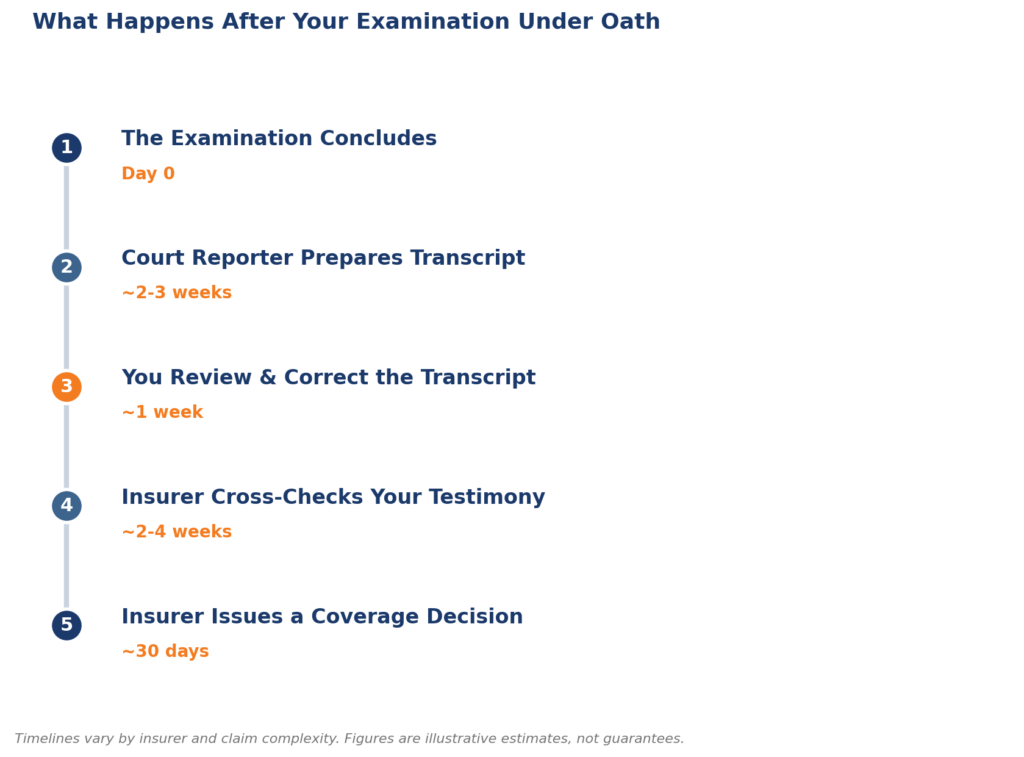
Figure 1. The general sequence of events following a Michigan EUO, from the close of testimony to the insurer’s coverage decision.
Reviewing and Correcting Your Transcript
A court reporter was present throughout your examination, recording every question and answer. That recording is converted into a written transcript, typically delivered within two to three weeks of the session. This document becomes the official legal record of your testimony, so its accuracy matters.
You have the right to review the transcript before it is finalized. This review process, sometimes called an errata process, allows you to correct genuine transcription errors, such as a misheard word, a misspelled name, or a garbled number. It is not an opportunity to change your substantive answers or add new information you wish you had said during the examination.
Reviewing the transcript carefully is worth the time it takes. Insurers and their attorneys will read this document closely, and any inconsistency between your transcript and other parts of your claim file may come under scrutiny later. If you worked with an attorney for your EUO, this is a stage where their involvement continues to matter, since they can help identify whether an error is a simple correction or something that needs a broader explanation.
What the Insurer Does With Your Testimony
Once the transcript is finalized, the insurer’s claims department, and in many cases its Special Investigation Unit, begins comparing your EUO testimony against the rest of your claim file. This cross-check typically looks at several sources at once.
- Your original claim application and any proof of loss documents you submitted
- Prior recorded statements or informal conversations with the adjuster
- Photographs, receipts, appraisals, or contractor estimates related to the claim
- Testimony from any other household or business members who were also examined
The goal of this review is consistency. Insurers are trained to look for gaps between what you said under oath and what appears elsewhere in the file. A minor discrepancy, such as a slightly different estimate of when damage occurred, is usually not fatal to a claim on its own. A pattern of inconsistencies or a contradiction on a material fact is more likely to prompt a closer look and extend the investigation.
This stage of the process typically takes two to four weeks, though complex claims or claims already flagged for special investigation can take longer. If you have not heard from your insurer within a reasonable window, following up in writing, ideally through an attorney, helps keep the claim moving and creates a paper trail of your continued cooperation.
Who Actually Reviews Your File After the EUO
Policyholders often picture a single adjuster reading through their file after the examination, but the reality is usually more layered. On a straightforward claim, your assigned adjuster may handle the entire review independently, comparing your testimony against the documentation already on file and making a recommendation.
On claims that were flagged for closer scrutiny, whether because of the claim size, prior red flags, or simply because the insurer routinely refers certain claim types for additional review, a Special Investigation Unit becomes involved. SIU investigators are trained specifically to look for inconsistencies across statements, timelines, and documentation. Their involvement does not automatically mean the insurer suspects fraud, but it does mean the review will be more thorough and often slower.
Some larger claims also involve outside counsel for the insurer, particularly if litigation seems possible regardless of the outcome. Knowing who is likely reviewing your file, based on the size and complexity of your claim, helps set realistic expectations for both the timeline and the level of scrutiny your testimony will receive.
Keeping Your Own Record During This Phase
While the insurer builds its file, it is worth building your own. Policyholders who stay organized during the post-EUO period tend to have an easier time if a dispute or denial later requires them to demonstrate their own diligence and cooperation.
- Keep a copy of your final, corrected transcript in a safe, accessible location
- Log every communication with the insurer after the EUO, including the date, the person you spoke with, and a brief summary of what was discussed or requested
- Save copies of everything you send to the insurer, along with proof of when it was sent
- Note any deadlines the insurer gives you in writing, and calendar them independently rather than relying on a follow up reminder from the adjuster
This kind of record does not need to be elaborate. A simple, dated log is often enough to resolve a later dispute over whether a document was actually sent or a deadline was actually communicated. If your claim does end in a denial, this record becomes one of the first things an attorney will want to review.
Possible Outcomes: Approval, Additional Requests, or Denial
Every EUO eventually leads to one of three outcomes, and knowing which one you are facing tells you what to do next.
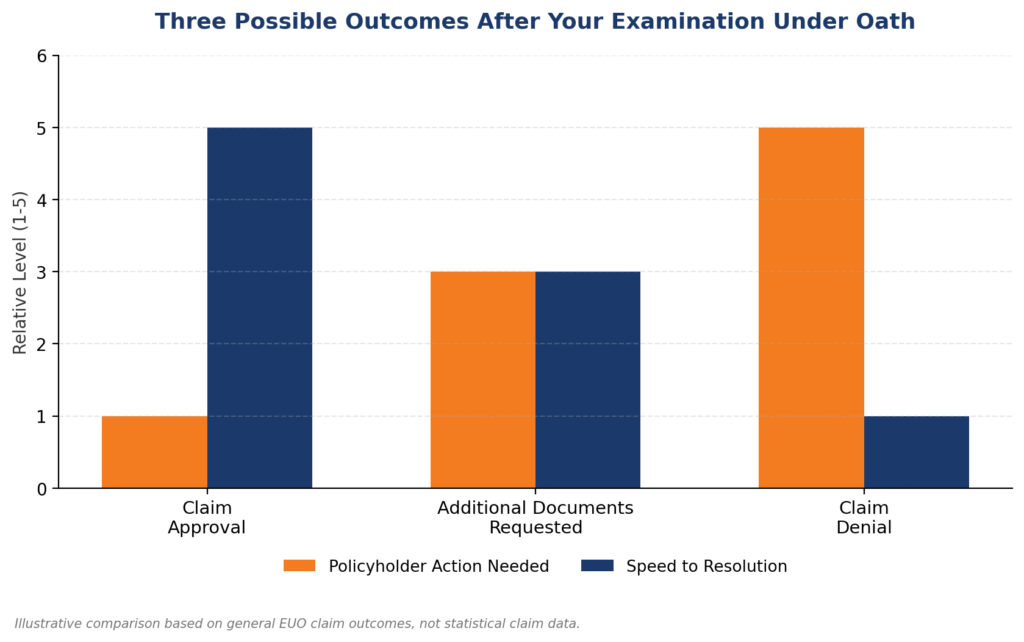
Figure 2. A comparison of the three outcomes that typically follow an EUO, and how much action each one requires from the policyholder.
Claim Approval
If your testimony held up against the rest of your file, the insurer moves forward with payment according to the terms of your policy. This is the fastest path to resolution and generally requires little further action from you beyond confirming payment details.
Additional Documentation Requested
Sometimes the insurer identifies a gap that is not necessarily a red flag, just a missing piece. This might include an updated repair estimate, a specific receipt, or clarification on a date. Responding promptly and completely is the best way to keep the claim moving toward approval.
Claim Denial
If the insurer concludes that your testimony conflicts with other evidence, or that the claim does not meet policy requirements, it may issue a formal denial. A denial following an EUO can feel discouraging, but it is not necessarily the end of the road.
It is worth noting that these three outcomes are not always as clean in practice as they look on paper. A claim can move through a partial approval, where the insurer agrees to pay for some portion of the loss while denying another. It can also move back and forth between a documentation request and a near denial more than once before a final decision is reached. Treating each communication from the insurer as part of an ongoing conversation, rather than a single final word, helps you respond appropriately at each stage, rather than reacting to what may be only an intermediate step.
If Your Claim Is Denied After an EUO, What Are Your Options
Michigan policyholders who receive a denial after an examination under oath still have paths forward. The denial letter itself is an important document, since insurers are generally required to state the specific reasons for denying a claim, and those reasons determine what your next move should be.
- Request the complete claim file and denial rationale in writing, including any internal notes referenced in the decision
- Have an attorney review the denial letter against your policy language to determine whether the stated reason is actually supported by your coverage
- Gather any additional documentation that directly addresses the insurer’s stated concern
- Understand the deadline for appeal or legal action under your policy and under Michigan law, since these deadlines are often shorter than people expect
In some cases, a denial rooted in an EUO is based on a genuine, good faith dispute over coverage. In other cases, it reflects an overly aggressive reading of a minor inconsistency, or a misapplication of policy language. An attorney experienced in EUO-related denials can tell you which situation you are in and, where appropriate, pursue litigation against the insurer to recover what the policy actually owes you.
How Long Does the Whole Process Take
Policyholders often ask for a single number, and the honest answer is that timelines vary by insurer, claim size, and whether the claim was flagged for a Special Investigation Unit review from the start. As a general guide, most straightforward claims move from EUO to final decision within 60 to 90 days. Complex claims, claims involving multiple examined parties, or claims where the insurer requests additional rounds of documentation can extend well beyond that window.
The single best way to keep your timeline on the shorter end is to be responsive. Every delay in providing a requested document or in responding to a follow-up question directly increases the length of the investigation. This is another area where having an attorney manage communication with the insurer tends to shorten the process rather than lengthen it, since organized, complete responses reduce the number of follow-up rounds.
Situations That Can Extend the Post-EUO Timeline
A handful of common situations tend to push a claim beyond the typical 60- to 90-day window, and knowing about them ahead of time helps you set realistic expectations rather than assuming something has gone wrong.
- Multiple insured parties were examined, and the insurer is waiting to compare all transcripts before proceeding
- The claim involves a business or commercial policy, which often carries more complex documentation requirements than a personal lines claim
- The insurer has escalated the file to outside counsel, which typically slows communication and formalizes every exchange
- Your claim involves a coverage dispute that goes beyond the facts of the loss itself, such as a disagreement over policy interpretation
- Supporting professionals, such as contractors, appraisers, or medical providers, are slow to produce documentation the insurer has requested
None of these situations are unusual, and none of them mean your claim is in worse shape than a faster moving one. They do mean patience and continued organization matter, and that periodic check ins with the insurer, spaced reasonably rather than constantly, help keep the file active without becoming a source of friction.
How Henri O. Harmon Supports Clients After the EUO
Our work for EUO clients does not end when the examination does. We review your transcript alongside you, flag anything that needs correction, and stay engaged with the insurer through the entire post-examination investigation. If additional documentation is requested, we help you assemble a complete, well organized response the first time, which reduces the back and forth that often extends a claim.
If your claim is ultimately denied, we review the denial against your policy language and advise you on the strongest path forward, whether that is a formal appeal, a demand letter, or litigation. Throughout the process, our goal is the same one we bring to the EUO itself, which is protecting your position at every stage of the insurer’s investigation.
We also recognize that this stage of a claim can be quietly stressful in a way that the examination itself is not. There is no scheduled hearing to prepare for, no single moment to brace for, just a waiting period where the outcome feels out of your hands. Part of our role is simply staying present during that waiting period, checking in with the insurer on your behalf so you are not left wondering whether your file has been forgotten, and giving you a clear, honest read on where things stand whenever you ask.
Frequently Asked Questions
How long after my EUO will I get a decision on my claim?
Most straightforward claims receive a decision within 60 to 90 days of the examination, though complex claims or claims with additional documentation requests can take longer. Michigan insurers are generally required to act on claims within a reasonable time, and your policy language may specify additional detail.
Can I still fix a mistake in my testimony after the EUO is over?
You can correct genuine transcription errors during the errata review process, but you cannot substantively change your sworn answers after the fact. If you realize you gave an inaccurate answer, the right move is to speak with your attorney immediately rather than wait for the transcript, since how and when you address it matters.
What if the insurer asks for documents I already provided?
This happens more often than policyholders expect, usually due to internal file management rather than bad faith. Resending the document promptly, ideally through your attorney with a clear reference to when it was originally provided, keeps the claim on track without unnecessary friction.
Does a denial after an EUO mean my claim was fraudulent?
No. A denial can result from many factors, including legitimate coverage disputes, policy exclusions, or disagreements over the value of a loss. An EUO-related denial is not automatically an accusation of fraud, and many denials are successfully challenged once reviewed against the actual policy language.
What happens if I miss a deadline during this phase of the claim?
Missing a deadline, whether for submitting requested documents or responding to a follow-up letter, can weaken your position and in some cases give the insurer grounds to deny the claim for non-cooperation. If you are at risk of missing a deadline, contact the insurer or your attorney before it passes rather than after, since a proactive request for a short extension is treated very differently than silence.
Should I contact the insurer directly during this waiting period, or wait to hear from them?
A reasonable, periodic check-in is appropriate and often helpful, especially if a stated timeline has passed without an update. What matters is tone and documentation. A brief, professional written inquiry requesting a status update is far more useful than repeated calls and creates a record showing you remained engaged and cooperative throughout the process.
Talk to a Michigan EUO Attorney About Your Claim
Whether you are preparing for an upcoming examination, waiting on a decision after one, or facing a denial you do not understand, the period after an EUO is not one to navigate alone. Contact Henri O. Harmon today for a free, confidential EUO consultation. We will review the status of your claim and help you understand exactly what comes next.
There is no cost and no obligation to reach out, whether you are calling us the same week as your examination or months later after receiving a denial letter that raises more questions than it answers.